Thursday, February 16, 2017
Latest iPhone 7 leak shows rear shell in four colors
Latest iPhone 7 leak shows rear shell in four colors

As we inch closer to the iPhone 7 and its expected September debut, the leaks of Apple’s next smartphone are starting to heat up.

from PhoneDog.com - Latest videos, reviews, articles, news and posts http://ift.tt/29TEx7B
via IFTTT
Available link for download

Wednesday, February 15, 2017
Google adds Emergency Location Service to Android rolling out first in the UK and Estonia
Google adds Emergency Location Service to Android rolling out first in the UK and Estonia

You may be wary of making your location available to apps and service on Android, but that uneasiness goes away in an emergency situation. If you call emergency services, you want them to know exactly where you are, and now Android has the tools to make that happen. Well, if you live in the UK or Estonia. Those are the first two countries with support for the new Emergency Location Service.
When you call in an emergency with this service active, your location will automatically be transmitted directly to first responders (without passing through Google).
Read MoreGoogle adds Emergency Location Service to Android, rolling out first in the UK and Estonia was written by the awesome team at Android Police.


from Android Police – Android News, Apps, Games, Phones, Tablets http://ift.tt/2aFUVYu
via IFTTT
Available link for download
Changes coming to Pokémon GO as interest starts to wane in the U S
Changes coming to Pokémon GO as interest starts to wane in the U S

At ComicCon over the weekend, sudden celebrity John Hanke, CEO and founder of Pokémon GO developer Niantic, talked about the insane response to the game and upcoming features. While exact timelines were not given, Hanke did acknowledge that new monsters will be rolled out "in the coming months and years". He also noted how excited he was by the idea of customizable Pokéstops. At the same time, new data shows that the novelty may already be starting to wear off in the U.S..
 See also: Nintendo doesnt actually make Pokémon GO: investors freak out, shares plummet
 Hanke frequently mentioned how hard the Niantic team were working just to keep the servers from crashing. But there have clearly been several conversations about possible updates to the game, including those made by players. Suggestions include a function for breeding Pokémon, addition of in-game trading and other training-related updates.
But the most significant change as far as gameplay goes is the possibility of customizing Pokéstops. Hanke noted that Niantic is already seeing plenty of this, as players frequently place lure modules at Pokéstops, modifying their original intended purpose. As Hanke said, "thats a pretty cool idea that you can acquire an object that changes the function of a Pokéstop and gives it a new ability".

Hanke revealed that Niantic was already interested in introducing healing Pokéstops to the game. But any new features might take a while to appear, as right now it sounds like it is still all hands on deck just keeping the servers running as more and more new players join. Still, despite Pokémon GOs meteoric rise globally, it is finally starting to show signs of slowdown in the U.S..
The latest data from SurveyMonkey shows not only that Pokémon GOs daily active user numbers have plateaued, but in the last few days have actually started to decline. From a high watermark of 26 million on both Android and iOS 10 days ago, that number is steadily trending downward.

The same is true of install numbers. Day one represented the highest download rate for Pokémon GO in the U.S., which has rapidly dropped in the weeks since. This is counter to all other massively popular games, which traditionally see their highest download figures long after initial launch. Search volume for the phrase Pokémon GO has also peaked in the U.S..
While the profusion of Pokémon content across the web has no doubt caused some mental burn out, the massive distances walked in the game itself have worn out more than a few players physically too. The novelty aspect may have begun to wear off, but this is only natural. It will be interesting to see exactly how many active daily users the game can sustain over the long term. New features like those mentioned above are a critical piece of the puzzle to keep players coming back for more.
How much time do you spend on Pokémon GO? Has it fallen or risen over time?
Dont miss: Why very people people will ever "catch em all" in Pokémon GO
from Android Authority http://ift.tt/2arwCRM
via IFTTT
Available link for download
Saturday, February 11, 2017
Bank of America revamps interface in version 7 adds Spanish language FICO Score and credit card rewards
Bank of America revamps interface in version 7 adds Spanish language FICO Score and credit card rewards

Bank of Americas Android app has been stuck on the same look since 2014 when version 5.0 added a hint of Material Design and saved the interface from its Froyo days. With this new version 7.0, the app gets a major facelift with plenty of new features.
The new redesign and side-menu are getting mixed reviews on the Play Store: some users are raving about how easy it is to use and others are complaining about how unintuitive its become and how some areas require a lot more steps to get to.
Read MoreBank of America revamps interface in version 7, adds Spanish language, FICO Score, and credit card rewards was written by the awesome team at Android Police.


from Android Police – Android News, Apps, Games, Phones, Tablets http://ift.tt/29SZfC4
via IFTTT
Available link for download
Tuesday, February 7, 2017
API Updates for Sign In with Google
API Updates for Sign In with Google
Posted by Laurence Moroney
With the release of Google Play services 8.3, we’ve made a lot of improvements to Sign-In with Google. In the first blog post of this ongoing series, we discussed the user interface improvements. Today, we will look further into the changes to the API to make building apps that Sign-In with Google easier than ever before.
Changes to basic sign in flow
When building apps that sign in with Google, you’ll notice that there are a lot of changes to make your code easier to understand and maintain.
Prior to this release, if you built an app that used Sign-In with Google, you would build one that attempted to connect to a GoogleApiClient. At this point the user was presented with an account picker and/or a permissions dialog, both of which would trigger a connection failure. You would have to handle these connection failures in order to sign in. Once the GoogleApiClient connected, then the user was considered to be signed in and the permissions could be granted. The process is documented in a CodeLab here.
Now, your code can be greatly simplified.
The process of signing in and connecting the GoogleApiClient are handled separately. Signing in is achieved with a GoogleSignInOptions object, on which you specify the parameters of the sign in, such as scopes that you desire. Here’s a code example:
GoogleSignInOptions gso = new GoogleSignInOptions.Builder(GoogleSignInOptions.DEFAULT_SIGN_IN) .requestEmail() .build(); Once you have a GoogleSignInOptions object, you can use it to configure the GoogleApiClient:
Here’s where your code will diverge greatly in the new API. Now, if you want to connect with a Google Account, instead of handling errors on the GoogleApiClient, you’ll instead use an intent that is initialized using the client.
Intent signInIntent = Auth.GoogleSignInApi.getSignInIntent(mGoogleApiClient); startActivityForResult(signInIntent, RC_SIGN_IN);
Starting the intent will give you the account picker, and the scopes permission dialog if your GoogleSignInOptions requested anything other than basic scope. Once the user has finished interacting with the dialogs, an OnActivityResult callback will fire, and it will contain the requisite sign-in information.
@Override public void onActivityResult(int requestCode, int resultCode, Intent data) { super.onActivityResult(requestCode, resultCode, data); // Result returned from launching the Intent from GoogleSignInApi.getSignInIntent(...); if (requestCode == RC_SIGN_IN) { GoogleSignInResult result = Auth.GoogleSignInApi.getSignInResultFromIntent(data); handleSignInResult(result); } } You can learn more about this code in the Integrating Google Sign-In quickstart, or by looking at the sample code.
Silent Sign-In
To further reduce friction for users in a multi-device world, the API supports silent sign in. In this case, if your user has given authorization to the app on a different device, the details will follow their account, and they don’t need to re-give them on future devices that they sign into, unless they deauthorize. An existing sign-in is also cached and available synchronously on the current device is available.
Using it is as simple as calling the silentSignIn method on the API.
OptionalPendingResultopr = Auth.GoogleSignInApi.silentSignIn(mGoogleApiClient);
Then, you can check the isDone() method on the pending result -- and if it returns true, the user is signed in, and you can get their status from the PendingResult. If it isn’t then you have to wait for a callback with the SignInResult
if (pendingResult.isDone()) { doStuffWith(pendingResult.get()); } else { // Theres no immediate result ready, displays some progress indicator and waits for the // async callback. showProgressIndicator(); pendingResult.setResultCallback(new ResultCallback<GoogleSignInResult>() { @Override public void onResult(@NonNull GoogleSignInResult result) { updateButtonsAndStatusFromSignInResult(result); hideProgressIndicator(); } }); } Customizing the Sign-In Button
When building apps that Sign-In with Google, we provide a SignInButton object that has the Google branding, and which looks like this:

You can customize this button with a number of properties and constants that are documented in the API here.
The branding guidelines are available here, and they include versions of the buttons in PNG, SVG, EPS and other formats in many resolutions, including all the different states of the button. These files may be used for localization of the button, and if you need to match the style of the button to your app, guidelines are provided.
This only deals with the Android side of your app. You’ll likely have a server back end, and you may want to use the credentials on that securely.
In the next blog post, we’ll discuss how to use Sign-In with Google in server-side scenarios, including how to securely pass your credentials to your own server, and how to use Google back-end services, such as Google Drive, with the permission and credentials from users.
Available link for download
Sunday, February 5, 2017
JBL Charge 3 and Clip 2 prove theres still innovation in Bluetooth speakers
JBL Charge 3 and Clip 2 prove theres still innovation in Bluetooth speakers

You can find Bluetooth speakers anywhere — but JBLs latest stand out.
No matter your needs, theres a Bluetooth speaker out there to match — and you dont have to look hard to find one, either. For most people, their only real need is "the cheapest price possible" — but many will pay a bit for better features, quality and sound. And thats where JBL comes in, with the latest iterations of two of its Bluetooth speakers — the Charge 3 and Clip 2.
JBL isnt in the race to the bottom. Its hoping to stay on the higher end with high quality materials and of course sound, with some great features that can help turn a Bluetooth speaker experience from an "every once and a while" thing to an every-day useful accessory. Lets take a look at the JBL Charge 3 and Clip 2 speakers.
JBL Charge 3

The JBL Charge 3 is designed to be the center of the party or fill a room with sound, and thats immediately apparent with its size — larger than your average reusable water bottle, and weighing in at about 1.75 pounds. That weight comes from a sturdy, IPX7 waterproof enclosure that protects dual 10W speakers along with huge passive radiators on the ends that drive up the bass level.
With this much output you shouldnt be surprised that the Charge 3 has a 6000 mAh battery inside, which can offer you 20 hours of playback over Bluetooth. You probably arent going to use it for that long (or heck, even half that long) between charges, so JBL also gives you the option of tapping into that power with a full-sized USB port on the back that can be used to charge your phone at 2A from 5V, which is a typical rate for a non-Fast Charge AC adapter.
Its extremely handy if youve been streaming music from your phone to the speaker, but also nice to have for anyone else whos with you that needs a quick top-up. The speaker gives you a visual indication of its charge state with a set of LEDs in the base, and charges itself over Micro-USB with a cable and 5V/2.3A wall plug in the box if you need one.
Because of its size and weight you arent likely to be carrying the Charge 3 around much — its mostly going to stay put on a coffee table or brought out to the pool or picnic table when you need music for a group. I actually mostly kept it at my desk for daily music listening, both from my computer over a 3.5mm cable and my phone over Bluetooth — and it performed far better than my set of Logitech computer speakers, at a fraction of the size and complexity. Indoors there was no reason to ever get it above about 50% volume, and I rarely needed to max it out to get the music loud enough outside, even for a big group of people.
It sounds as good as youd expect at $150, and has a bunch of extra features.
At $150 this isnt exactly an impulse purchase (nor is it JBLs most expensive Bluetooth speaker), but if theres one thing that companies like JBL, Jawbone, Bose and countless others have shown us its that people are willing to pay a pretty penny for a really good, loud wireless speaker with some extra features. Thats exactly what you get with the Charge 3. Not only does it produce full sound with lots of bass out of a relatively small package (compared to big wired speakers), its also tough and completely waterproof so you never have to worry about what happens to it. It also goes above and beyond to let you tap into its battery to charge your phone, which can prove pivotal in keeping the tunes going late into the night.
It wont be worth the money to everyone, but its hard to argue that JBL isnt giving you plenty for your money here if youre looking for a big wireless speaker. (And if you want to save a bit, maybe consider the last-gen Charge 2+ for about $99.)
See at Amazon
JBL Clip 2

For as cool as the Charge 3 speaker is, Im a bigger fan of the small JBL Clip 2 and I think itll be one that more people will actually consider buying and using on a regular basis.
This little $60 speaker is roughly the size of a hockey puck but still offers some great sound from its single 3W speaker — even up to high volumes without distorting. It connects over Bluetooth, of course, and offers easy-to-press buttons around the edges for play/pause and volume control — you can also use a built-in microphone for calls via your connected phone. Better yet, theres also a built-in foot-long 3.5mm cable to plug in — that neatly wraps around and stores in the speaker — which is super useful when youre passing the speaker around at a get-together and or dont want to deal with Bluetooth pairing.
The speaker is built to take a beating, and feels like you could drive a nail with it if you needed to (but seriously, dont do that). Its also fully IPX7 waterproof, with a robust rubber door over the Micro-USB charging port, allowing it to handle dirt and even full submersion in water. Its rugged abilities are exemplified by the carabiner thats attached to the side of the Clip 2 (the name makes more sense now, huh?) that lets you hook it on things wherever you go.
When a speaker is built this well, it goes with you and you use it more.
I clipped it on the outside of my messenger bag or backpack to carry it places, not being worried about it getting bumped and knocked around. I clipped it to my pants pocket so I could listen to music around the house as I took care of some chores, and found it particularly useful to hook on the shower curtain in the morning for podcast listening in the shower.
JBL claims eight hours of music playback, and I found that to be perfect for a weeks worth of casual listening off and on around the house. It also powered through several hours of Bluetooth music streaming for my Fourth of July party with battery to spare — and again, I never had to worry about it getting bumped or dropped.
I found the rugged Clip 2 to be infinitely more useful than other standard Bluetooth speakers that are more fragile and dont have a clip, and because of its design elements I carried it around and used it more than any other speaker Ive had. Its more expensive than the dime-a-dozen Bluetooth speakers online, but you get something for it — and with how much more youre likely to use it, its worth it.
See at Amazon

from Android Central - Android Forums, News, Reviews, Help and Android Wallpapers http://ift.tt/2anC8lI
via IFTTT
Available link for download
Saturday, February 4, 2017
Android Developer Story StoryToys finds success in the ‘Family’ section on Google Play
Android Developer Story StoryToys finds success in the ‘Family’ section on Google Play
Posted by Lily Sheringham, Google Play team
Based in Dublin, Ireland, StoryToys is a leading publisher of interactive books and games for children. Like most kids’ app developers, they faced the challenges of engaging with the right audiences to get their content discovered. Since the launch of the Family section on Google Play, StoryToys has experienced an uplift of 270% in revenue and an increase of 1300% in downloads.
Hear Emmet O’Neill, Chief Product Officer, and Gavin Barrett, Commercial Director, discuss how the Family section creates a trusted and creative space for families to find new content. Also hear how beta testing, localized pricing and more, has allowed StoryToy’s flagship app, My Very Hungry Caterpillar, to significantly increase engagement and revenue.
Learn more about Google Play for Families and get the Playbook for Developers app to stay up-to-date with more features and best practices that will help you grow a successful business on Google Play.
Available link for download
Friday, February 3, 2017
Google Camera gets twist gesture in Nougat Dev Preview 5
Google Camera gets twist gesture in Nougat Dev Preview 5

Motorola fans are probably already familiar with this one. The Moto X and its ilk arrived with the ability to launch the default camera app using a rapid double-twist gesture thats almost exactly like what you would do if your watch gets stuck too high up on your wrist. If youre inside the camera, then performing this motion would swap between front and rear camera with a satisfying haptic rush. Now Google Camera v4.1 on the fifth Nougat developers preview is getting a similar feature.
Although you cant launch the app cold with this gesture, you are able to swap between cameras. It can be a little counter-intuitive at first, but once youve done it a few times, using this method rather than tapping the icon on the screen becomes second nature.
 See also: Google Camera app rumored to get Google Goggles functionality
 This is only one of the most prominent features to arrive for Google Camera with Nougat. The app is also getting a slew of user interface adjustments that include more intuitive options and cleaner animations. Were also getting the ability to pause video recordings, a feature that has been a long time coming.
Check out our coverage on the Nougat Dev Preview to get yourself on the cutting edge of the Android operating system, and click the button below to snag the latest version of the Google Camera from the Google Play Store. Give the twisting gesture a spin, then let us know in the comments if its something youll be using on the regular.
from Android Authority http://ift.tt/29VlFaC
via IFTTT
Available link for download
Friday, January 20, 2017
Motorola All In One Flash Too Softwarel Free Download
Motorola All In One Flash Too Softwarel Free Download
- It is available on different sites for downloading
- Can support for flashing many Motorola mobiles
- Very easy and straight to use
- You can flash your mobiles without flashing boxes
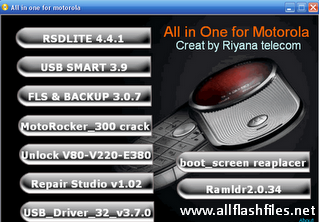
First of all you will need to download the latest setup of Motorola flash tool and install it on your PC. After that download the latest flash files of your mobile and put it in one specific folder in C:Program Files because during flashing you can find it easily. Now you can download latest setup of Motorola mobile flash tool from below download links. If downloading links are not working or you are unable to download please contact us via commenting.
Downloading links
Motorola Mobile Flashing Tool Download
Available link for download
Introducing Android Developer Nanodegree in India with Udacity—1000 scholarships available
Introducing Android Developer Nanodegree in India with Udacity—1000 scholarships available
Originally posted on the Google India blog
Posted by Peter Lubbers, Senior Program Manager, Google
With a vision to transform India into a hub of high-quality mobile developers for global and local apps, we’re delighted to announce the launch of a program to offer Android Developer Nanodegrees in India in partnership with Udacity. The Android Nanodegree is an education credential that is designed to help developers learn new skills and advance their careers in a few months—from anywhere on any device—at their own pace.
The Udacity Android Nanodegree program comprises of courses developed and taught by expert Google instructors from the Google Developer Relations team and will include project reviews, mentorship and career services from Udacity. The curriculum will be updated regularly with new releases and will provide developers with a certificate that will help them to be a more marketable Android developer.
With 3 million software developers, India is already the second largest developer population in the world, but we still lag behind in creating world-class apps. With the launch of this program we want to bridge the gap by providing India’s developer community with an easy way to learn and build high quality apps for the world. Today, only less than 2% of apps built in India feature in top 1000 apps globally and our goal is to raise this to 10% in next three years.
The Udacity Android Nanodegree program is open for enrollment from today. The program takes an average of 6-9 months to complete and costs Rs. 9,800 per month with Udacity refunding 50 percent of the tuition upon completion. Google and Tata Trusts have partnered to give 1000 scholarships for the Android Nanodegree to deserving students and will be available from today. Interesting applicants can visit https://www.udacity.com/india for more information.
Speaking about their association with the Android Nanodegree program, Mr. Venkat - Managing Director of Tata Trusts said, “India has one of the youngest population of developers, where the average age of a developer is just 25 years old. While the last decade has established India as the largest provider of a skilled IT workforce to the world, there is an opportunity to help our young developers and equip them to compete on a global stage through educational and skill building programs. As part of our association, we’re glad to announce 500 free scholarships for the complete Android Nanodegree."
Available link for download
Monday, January 2, 2017
Make Money any where in The World through Blogging Affiliate Marketing and Freelancing complete Guide
Make Money any where in The World through Blogging Affiliate Marketing and Freelancing complete Guide
1. Blogging (with Advertisements)
It is the simplest way to make money on the internet , you just have to begin a blog/website and also work really hard into it , begin a blog/website on a subject by which you have got a solid hold , would mean you will have skills/knowledge within that subject , so that you can do the job perfectly . You can begin the website/blog with WordPress or Blogger . Showing advertising on your blog/site is among the simplest way to earn revenue on the internet in which you can utilize following advertisement sites :
Google Adsense ( High Paying Google Adsense Keywords to boost Earnings )
BuySellAds
Adwager
Infolinks
Chitika
PublicityClerk
Infinityads
2. Affiliate Marketing
Affiliate marketing online is also a method to earn large money , with this technique you need to advertise other people/companies items so when somebody purchases the item , you are provided a commission that has been from 20% to 50% . You may also show affiliate ad banners on your site . Following web sites offers you to earn cash by advertising their items :
ClickBank
Sharesale
BlueHost
HostGator
HosterPK
3. Freelancing
It is the 3rd effective way to earn online , but it needs abilities by which you will have capability . Due to the fact on almost all free-lance sites you’ll need to perform expertly based on worldwide criteria . There are plenty of tasks awaiting you over these kind of freelancing sites , however you should be aware the needed abilities for the tasks . But , freelance sites pay you in time and also present you with complete chances . Following is the list of widely used free-lance programs :
Odesk
elance
freelance.com
rehant.com
Available link for download
Sunday, January 1, 2017
In app translations in Android Marshmallow
In app translations in Android Marshmallow
Posted by, Barak Turovsky, Product Lead, Google Translate
Google Translate is used by more than 500 million people every month, translating more than 100 billion words every single day.
Beginning this week, Android mobile users who have the Translate app installed will be able to translate in 90 languages right within some of their favorite apps on any device running the newest version of Android’s operating system (Android 6.0, Marshmallow).
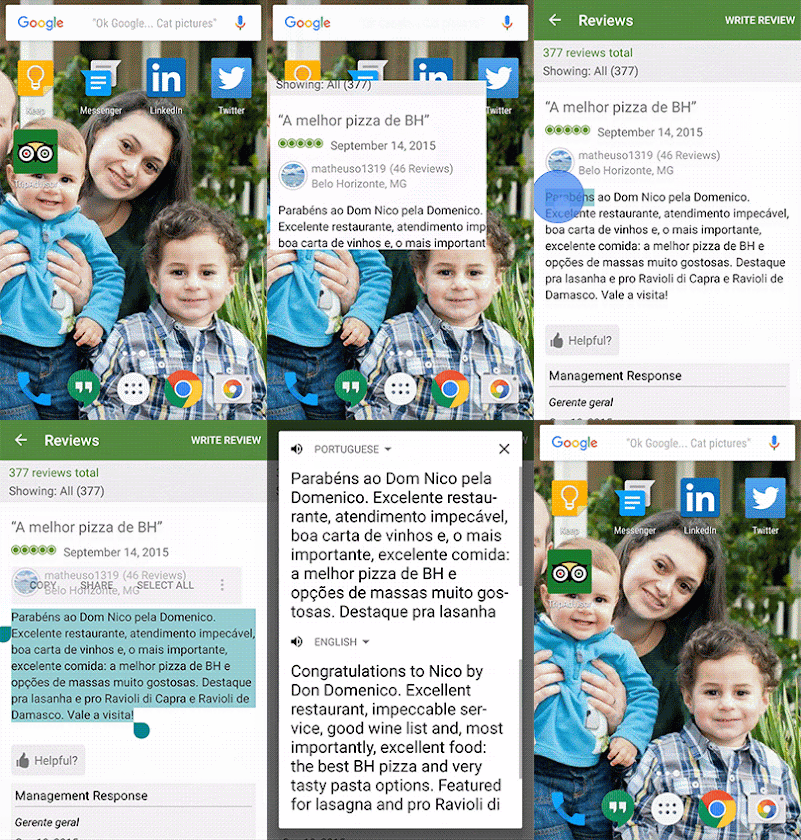
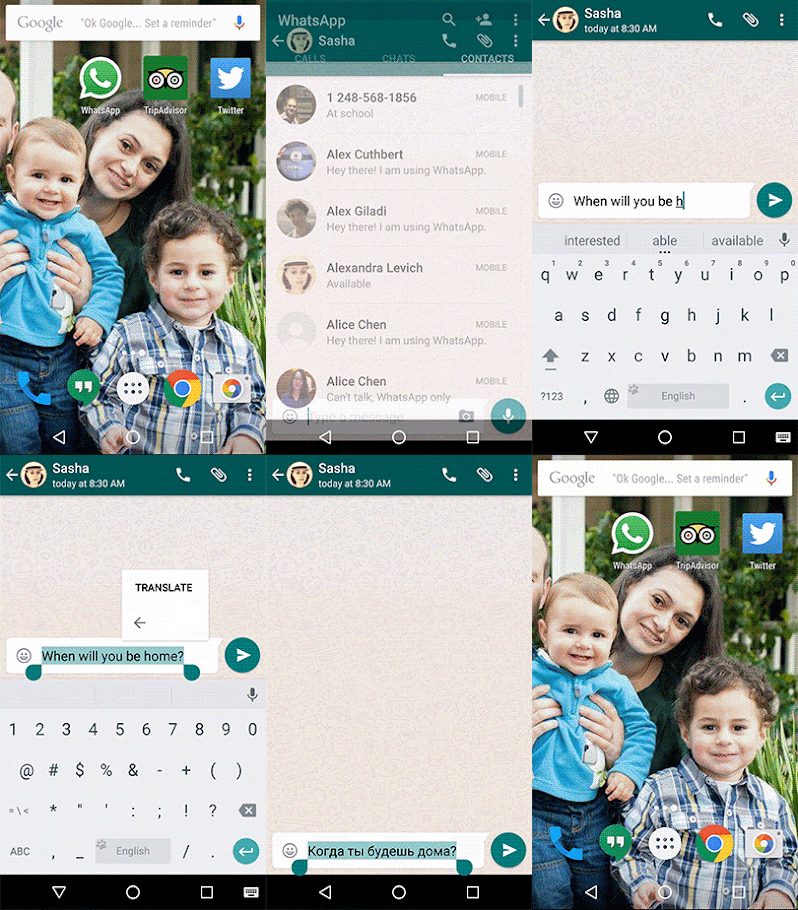
Android apps that use Android text selection behavior will already have this feature enabled, so no extra steps need to be taken. Developers who created custom text selection behavior for their apps can easily implement this feature by following the below steps:
Scan via the PackageManager through all packages that have the PROCESS_TEXT intent filter (for example: com.google.android.apps.translate - if it installed) and add them as MenuItems into TextView selections for your app
- To query the package manager, first build an intent with the action
private Intent createProcessTextIntent() { return new Intent() .setAction(Intent.ACTION_PROCESS_TEXT) .setType("text/plain"); } - Then retrieve the supported activities
private List
getSupportedActivities() { PackageManager packageManager = mTextView.getContext().getPackageManager(); return packageManager.queryIntentActivities(createProcessTextIntent(), 0); } - add an item for each retrieved activity and attach an intent to it to launch the action
public void onInitializeMenu(Menu menu) { // Start with a menu Item order value that is high enough // so that your "PROCESS_TEXT" menu items appear after the // standard selection menu items like Cut, Copy, Paste. int menuItemOrder = 100; for (ResolveInfo resolveInfo : getSupportedActivities()) { menu.add(Menu.NONE, Menu.NONE, menuItemOrder++, getLabel(resolveInfo)) .setIntent(createProcessTextIntentForResolveInfo(resolveInfo)) .setShowAsAction(MenuItem.SHOW_AS_ACTION_IF_ROOM); } }
resolveInfo.loadLabel(mPackageManager);
The intent for each item can be created reusing the filter intent that you defined before and adding the missing data:
private Intent createProcessTextIntentForResolveInfo(ResolveInfo info) { return createProcessTextIntent() .putExtra(Intent.EXTRA_PROCESS_TEXT_READONLY, ! mTextView.isTextEditable()) .setClassName(info.activityInfo.packageName, info.activityInfo.name); } Adding the translation option to your apps text selection menu (if you don’t use default Android text selection behavior) is easy and takes just a few extra lines of code. And remember, when a user is composing a text to translate, your app you should keep the selection when the Translate app is triggered.
With this new feature, Android Translate app users users will be able to easily translate right from within participating apps. We will be adding more documentation and sample code on this feature in the upcoming weeks.
Available link for download
Friday, December 30, 2016
Face Detection in Google Play services
Face Detection in Google Play services
Posted by Laurence Moroney, Developer Advocate
With the release of Google Play services 7.8, we announced the addition of new Mobile Vision APIs, which includes a new Face API that finds human faces in images and video better and faster than before. This API is also smarter at distinguishing faces at different orientations and with different facial features facial expressions.
Face Detection
Face Detection is a leap forward from the previous Android FaceDetector.Face API. It’s designed to better detect human faces in images and video for easier editing. It’s smart enough to detect faces even at different orientations -- so if your subject’s head is turned sideways, it can detect it. Specific landmarks can also be detected on faces, such as the eyes, the nose, and the edges of the lips.
| Important Note This is not a face recognition API. Instead, the new API simply detects areas in the image or video that are human faces. It also infers from changes in the position frame to frame that faces in consecutive frames of video are the same face. If a face leaves the field of view, and re-enters, it isn’t recognized as a previously detected face. |
Detecting a face
When the API detects a human face, it is returned as a Face object. The Face object provides the spatial data for the face so you can, for example, draw bounding rectangles around a face, or, if you use landmarks on the face, you can add features to the face in the correct place, such as giving a person a new hat.
getPosition()- Returns the top left coordinates of the area where a face was detectedgetWidth()- Returns the width of the area where a face was detectedgetHeight()- Returns the height of the area where a face was detectedgetId()- Returns an ID that the system associated with a detected face
Orientation
The Face API is smart enough to detect faces in multiple orientations. As the head is a solid object that is capable of moving and rotating around multiple axes, the view of a face in an image can vary wildly.
Here’s an example of a human face, instantly recognizable to a human, despite being oriented in greatly different ways:

The API is capable of detecting this as a face, even in the circumstances where as much as half of the facial data is missing, and the face is oriented at an angle, such as in the corners of the above image.
Here are the method calls available to a face object:
getEulerY()- Returns the rotation of the face around the vertical axis -- i.e. has the neck turned so that the face is looking left or right [The y degree in the above image]getEulerZ()- Returns the rotation of the face around the Z azis -- i.e. has the user tilted their neck to cock the head sideways [The r degree in the above image]
Landmarks
A landmark is a point of interest within a face. The API provides a getLandmarks() method which returns a List, where a Landmark object returns the coordinates of the landmark, where a landmark is one of the following: Bottom of mouth, left cheek, left ear, left ear tip, left eye, left mouth, base of nose, right cheek, right ear, right ear tip, right eye or right mouth.

Activity
In addition to detecting the landmark, the API offers the following function calls to allow you to smartly detect various facial states:
getIsLeftEyeOpenProbability()- Returns a value between 0 and 1, giving probability that the left eye is opengetIsRighteyeOpenProbability()- Same but for right eyegetIsSmilingProbability()- Returns a value between 0 and 1 giving a probability that the face is smiling
Thus, for example, you could write an app that only takes a photo when all of the subjects in the image are smiling.

Learn More
It’s easy to build applications that use facial detection using the Face API, and we’ve provided lots of great resources that will allow you to do so. Check them out here:
Follow the Code Lab
Read the Documentation
Explore the sample
+Android Developers

Available link for download
Tuesday, December 27, 2016
Improving Stability with Private C C Symbol Restrictions in Android N
Improving Stability with Private C C Symbol Restrictions in Android N
Posted by Dimitry Ivanov & Elliott Hughes, Software Engineers
As documented in the Android N behavioral changes, to protect Android users and apps from unforeseen crashes, Android N will restrict which libraries your C/C++ code can link against at runtime. As a result, if your app uses any private symbols from platform libraries, you will need to update it to either use the public NDK APIs or to include its own copy of those libraries. Some libraries are public: the NDK exposes libandroid, libc, libcamera2ndk, libdl, libGLES, libjnigraphics, liblog, libm, libmediandk, libOpenMAXAL, libOpenSLES, libstdc++, libvulkan, and libz as part of the NDK API. Other libraries are private, and Android N only allows access to them for platform HALs, system daemons, and the like. If you aren’t sure whether your app uses private libraries, you can immediately check it for warnings on the N Developer Preview.
We’re making this change because it’s painful for users when their apps stop working after a platform update. Whether they blame the app developer or the platform, everybody loses. Users should have a consistent app experience across updates, and developers shouldn’t have to make emergency app updates to handle platform changes. For that reason, we recommend against using private C/C++ symbols. Private symbols aren’t tested as part of the Compatibility Test Suite (CTS) that all Android devices must pass. They may not exist, or they may behave differently. This makes apps that use them more likely to fail on specific devices, or on future releases — as many developers found when Android 6.0 Marshmallow switched from OpenSSL to BoringSSL.
You may be surprised that there’s no STL in the list of NDK libraries. The three STL implementations included in the NDK — the LLVM libc++, the GNU STL, and libstlport — are intended to be bundled with your app, either by statically linking into your library, or by inclusion as a separate shared library. In the past, some developers have assumed that they didn’t need to package the library because the OS itself had a copy. This assumption is incorrect: a particular STL implementation may disappear (as was the case with stlport, which was removed in Marshmallow), may never have been available (as is the case with the GNU STL), or it may change in ABI incompatible ways (as is the case with the LLVM libc++).
In order to reduce the user impact of this transition, we’ve identified a set of libraries that see significant use from Google Play’s most-installed apps, and that are feasible for us to support in the short term (including libandroid_runtime.so, libcutils.so, libcrypto.so, and libssl.so). For legacy code in N, we will temporarily support these libraries in order to give you more time to transition. Note that we dont intend to continue this support in any future Android platform release, so if you see a warning that means your code will not work in a future release — please fix it now!
Table 1. What to expect if your app is linking against private native libraries.
| Libraries | Apps targetSdkVersion | Runtime access via dynamic linker | Impact, N Developer Preview | Impact, Final N Release | Impact, future platform version |
| NDK Public | Any | Accessible | |||
| Private (graylist) | <=23 | Temporarily accessible | Warning / Toast | Warning | Error |
| >=24 | Restricted | Error | Error | Error | |
| Private (all other)> | Any | Restricted | Error | Error | Error |
What behavior will I see?
Please test your app during the N Previews.
N Preview behavior
- All public NDK libraries (libandroid, libc, libcamera2ndk, libdl, libGLES, libjnigraphics, liblog, libm, libmediandk, libOpenMAXAL, libOpenSLES, libstdc++, libvulkan, and libz), plus libraries that are part of your app are accessible.
- For all other libraries you’ll see a warning in logcat and a toast on the display. This will happen only if your app’s
targetSdkVersionis less than N. If you change your manifest to target N, loading will fail: Java’s System.loadLibrary will throw, and C/C++’s dlopen(3) will return NULL.

Test your apps on the Developer Preview — if you see a toast like this one, your app is accessing private native APIs. Please fix your code soon!
N Final Release behavior
- All NDK libraries (libandroid, libc, libcamera2ndk, libdl, libGLES, libjnigraphics, liblog, libm, libmediandk, libOpenMAXAL, libOpenSLES, libstdc++, libvulkan, and libz), plus libraries that are part of your app are accessible.
- For the temporarily accessible libraries (such as libandroid_runtime.so, libcutils.so, libcrypto.so, and libssl.so), you’ll see a warning in logcat for all API levels before N, but loading will fail if you update your app so that its
targetSdkVersionis N or later. - Attempts to load any other libraries will fail in the final release of Android N, even if your app is targeting a pre-N platform version.
Future platform behavior
- In O, all access to the temporarily accessible libraries will be removed. As a result, you should plan to update your app regardless of your
targetSdkVersionprior to O. If you believe there is missing functionality from the NDK API that will make it impossible for you to transition off a temporarily accessible library, please file a bug here.
What do the errors look like?
Here’s some example logcat output from an app that hasn’t bumped its target SDK version (and so the restriction isn’t fully enforced because this is only the developer preview):
03-21 17:07:51.502 31234 31234 W linker : library "libandroid_runtime.so" ("/system/lib/libandroid_runtime.so") needed or dlopened by "/data/app/com.popular-app.android-2/lib/arm/libapplib.so" is not accessible for the namespace "classloader-namespace" - the access is temporarily granted as a workaround for http://b/26394120 This is telling you that your library “libapplib.so” refers to the library “libandroid_runtime.so”, which is a private library.
When Android N ships, or if you set your target SDK version to N now, you’ll see something like this if you try to use System.loadLibrary from Java:
java.lang.UnsatisfiedLinkError: dlopen failed: library "libcutils.so" ("/system/lib/libcutils.so") needed or dlopened by "/system/lib/libnativeloader.so" is not accessible for the namespace "classloader-namespace" at java.lang.Runtime.loadLibrary0(Runtime.java:977) at java.lang.System.loadLibrary(System.java:1602) If you’re using dlopen(3) from C/C++ you’ll get a NULL return and dlerror(3) will return the same “dlopen failed...” string as shown above.
For more information about how to check if your app is using private symbols, see the FAQ on developer.android.com.
Available link for download
Sunday, December 25, 2016
Listen Again in Google Translate
Listen Again in Google Translate
Emanuele Bartolomucci, a reader of this blog, noticed an interesting feature in Google Translate. If you click the "listen" button next to the text you want to translate or the translation, Google converts the text into speech. Click "listen" again and the speed decreases, probably because Google assumes that you are listening again to better get the correct pronunciation. Its like asking Google: "Could you speak more slowly, please?"

If you click "listen" the third time, Google goes back to the normal speed. Click again and the speed decreases. The two text-to-speech versions alternate.
Ive checked Google Translates URLs and the second version has the following parameter: "ttsspeed=0.24", which changes the text-to-speech speed.
{ Thanks, Emanuele. }
Available link for download
Wednesday, December 21, 2016
HTC Desire 530 now available in the USA
HTC Desire 530 now available in the USA

Just as promised, the HTC Desire 530 has become available in the USA. The device is being sold directly from HTCs website and costs $179. So far only the Sprinkle White version is available, which does look pretty neat.
By the way, that sprinkled design is what stands out the most in this smartphone. Other specs and features are much more modest. The phone touts a 5-inch 720p display, a Qualcomm Snapdragon 210 chipset, 1.5 GB of RAM, 16 GB of internal storage, an 8 MP rear camera and a 5 MP front-facing shooter; all powered by a 2,200 mAh battery.By the way, that sprinkled design is what stands out the most in this smartphone.

What you have to wonder is whether the phone is worth the $179 bucks or not. to learn more about the device you can always check out our hands-on coverage from Mobile World Congress 2016. Its definitely a neat phone… just nothing extraordinary. Unless you are really into sprinkled paint designs, of course.
Those who arent quite convinced can also refer back to our buying guide on the best cheap Android smartphones. Are any of you signing up? Hit the comments to let us know.
from Android Authority http://ift.tt/2aonQno
via IFTTT
Available link for download
Monday, December 19, 2016
Improvements to Sign In with Google Play services 8 3
Improvements to Sign In with Google Play services 8 3
Posted by Laurence Moroney, Developer Advocate
With Google Play services 8.3, we’ve been hard at work to provide a greatly improved sign-in experience for developers that want to build apps that sign their users in with Google. To help you better understand some of these changes, this is the first in a series of blog posts about what’s available to you as a developer. In this post, we’ll discuss the changes to the user experience, and how you can use them in your app, as well as updates to the API to make coding Sign-In with Google more straightforward. On Android Marshmallow, this new Sign-In API has removed any requirement for device permissions, so there is no need to request runtime access to the accounts on the device, as was the case with the old API.
User Experience Improvements
We’ve gotten lots of feedback from developers about the user experience of using Google’s social sign-in button. Many of you noted that it took too many steps and was confusing for users. Typically, the experience is that the user touches a sign in button, and they are asked to choose an account. If that account doesn’t have a Google+ profile, they need to create one, and after that they have to give permissions based on the type of information that the app is asking for. Finally, they get to sign in to the app.
With the new API, the default set of permissions that the app requests has been reduced to basic profile information and optionally email address as demonstrated here. This introduces opportunities for much streamlined user experience: the first improvement here is in the presentation of the button itself. We had received feedback that the Google+ branding on the Sign-In button made it feel like the user would need to share Google+ data, which most apps don’t use. As such, the SignInButton has been rebranded with the reduced scopes -- it now reads ‘Sign In with Google’, and follows the standard Google branding for use with basic profile information.

After this, the user flow is also more straightforward. Instead of subsequent screens where a Google account is picked based on the email addresses registered on the device, followed by a potential ‘Create Google+ Profile’ dialog, followed by a permissions consent dialog, like this:
 |  |  |
The user experience has changed to a single step, where the user chooses their account and gives consent. If they don’t have a Google+ profile, they don’t need to create one, eliminating that step. Additional consent dialogs come later, and are best requested in context so that the user understand why you might ask for access to their calendar or contact, and they are only prompted at the time that this data is needed.
 |  |  |
We hope that a streamlined, one-tap, non-social sign-in option with additional OAuth permissions requested in context will help improve your sign-in rates and make it a breeze to sign-in with Google.
Check out some live apps that use the new API, including Instacart, NPR One, and Bring!
 |  |
In the next post we’ll build on this by looking at some of the changes in the API to make coding apps that use Sign-In with Google even easier.

Available link for download