Saturday, February 18, 2017
Dragon Ball XenoVerse Game Download Full Version for PC
Dragon Ball XenoVerse Game Download Full Version for PC

Description:

Screen Shoots:


Download
Download Dragon Ball XenoVerse
Available link for download

Developer tips for success with Player Analytics and Google Play games services
Developer tips for success with Player Analytics and Google Play games services
Posted by, Lily Sheringham, Developer Marketing at Google Play
Editor’s note: As part of our series featuring tips from developers, we spoke to some popular game developers to find out how they use Player Analytics and Google Play game services to find success on Google Play. - Ed.
Google Play games services, available in the Developer Console, allows you to add features such as achievements and leaderboards to your games. Google Play games services provides Player Analytics, a free games-specific analytics tool, in the Developer Console Game services tab. You can use the reports to understand how players are progressing, spending, and churning backed by a data-driven approach.

Bombsquad grows revenue by 140% per user with Player Analytics
Independent developer Eric Froemling, initially created the game Bombsquad as a hobby, but now relies on it as his livelihood. Last year, he switched the business model of the game from paid to free-to-play. By using Player Analytics, he was able to improve player retention and monetization in the game, achieving a 140% increase in the average revenue per daily active user (ARPDAU).
Watch the video below to learn how Eric uses Player Analytics and the Developer Console to improve gamers’ experience, while increasing retention and monetization.

Tips from Auxbrain for success with Google Play games services
Kevin Pazirandeh, founder and CEO of games developer Auxbrain, creator of Zombie Highway, provides insight into how they use Google Play games services, and comments:
“While there are a few exceptions, I have not run into a better measure of engagement, and perhaps more importantly, a measure for change in engagement, than the retention table. For the uninitiated, a daily retention table gives you the % of players who return on the nth day after their first play. Comparing retention rates of two similar games can give you an immediate signal if you are doing something right or wrong.”
Kevin shares his top tips on how to best use the analytics tools in Google Play games services:
- You get Player Analytics for free - If you’ve implemented Google Play game services in your games, check out Player Analytics under Game services in the Developer Console, you’ll find you are getting analytics data already.
- Never assume change is for the better - Players may not view changes in your game as the improvement you had hoped they were. So when you make a change, have a strategy for measuring the result. Where you cannot find a way to measure the change’s impact with Player Analytics, consider not making it and prioritize those changes you can measure.
- Use achievements and events to track player progress - If you add achievements or events you can use the Player progression report or Event viewer to track player progress. You’ll quickly find out where players are struggling or churning, and can look for ways to help move players on.
- Use sign-in to get more data - The more data about player behavior you collect, the more meaningful the reports in Player Analytics become. The best way to increase the data collected is to get more players signed-in. Auto sign-in players, and provide a Play game services start point on the first screen (after any tutorial flow) for those that don’t sign-in first time.
- Track your player engagement with Retention tables - The Retention table report lets you see where players are turning away, over time. Compare retention before and after changes to understand their impact, or between similar games to see if different designs decisions are turning players away earlier or later.
Get started with Google Play Games Services or learn more about products and best practices that will help you grow your business on Google Play globally.
Available link for download
Thursday, February 16, 2017
Improvements for smaller app downloads on Google Play
Improvements for smaller app downloads on Google Play
Posted by Anthony Morris, SWE Google Play
Google Play continues to grow rapidly, as Android users installed over 65 billion apps in the last year from the Google Play Store. We’re also seeing developers move to update their apps more frequently to push great new content, patch security vulnerabilities, and iterate quickly on user feedback.
However, many users are sensitive to the amount of data they use, especially if they are not on Wi-Fi. Google Play is investing in improvements to reduce the data that needs to be transferred for app installs and updates, while making data cost more transparent to users.
Read on to understand the updates and learn some tips for ways to optimize the size of your APK.
New Delta algorithm to reduce the size of app updates
For approximately 98% of app updates from the Play Store, only changes (deltas) to APK files are downloaded and merged with the existing files, reducing the size of updates. We recently rolled out a delta algorithm, bsdiff, that further reduces patches by up to 50% or more compared to the previous algorithm. Bsdiff is specifically targeted to produce more efficient deltas of native libraries by taking advantage of the specific ways in which compiled native code changes between versions. To be most effective, native libraries should be stored uncompressed (compression interferes with delta algorithms).
An example from Chrome:
| Patch Description | Previous patch size | Bsdiff Size |
| M46 to M47 major update | 22.8 MB | 12.9 MB |
| M47 minor update | 15.3 MB | 3.6 MB |
Apps that don’t have uncompressed native libraries can see a 5% decrease in size on average, compared to the previous delta algorithm.
Applying the delta algorithm to APK Expansion Files to further reduce update size
APK Expansion Files allow you to include additional large files up to 2GB in size (e.g. high resolution graphics or media files) with your app, which is especially popular with games. We have recently expanded our delta and compression algorithms to apply to these APK Expansion Files in addition to APKs, reducing the download size of initial installs by 12%, and updates by 65% on average.
Clearer size information in the Play Store
Alongside the improvements to reduce download size, we also made information displayed about data used and download sizes in the Play Store clearer. You can now see actual download sizes, not the APK file size, in the Play Store. If you already have an app, you will only see the update size. These changes are rolling out now.


Tips to reduce your download sizes
1. Optimize for the right size measurements: Users care about download size (i.e. how many bytes are transferred when installing/updating an app), and they care about disk size (i.e. how much space the app takes up on disk). It’s important to note that neither of these are the same as the original APK file size nor necessarily correlated.
Chrome example:
| Compressed Native Library | Uncompressed Native Library | |
| APK Size | 39MB | 52MB (+25%) |
| Download size (install) | 29MB | 29MB (no change) |
| Download size (update) | 29MB | 21MB (-29%) |
| Disk size | 71MB | 52MB (-26%) |
Chrome found that initial download size remained the same by not compressing the native library in their APK, while the APK size increased, because Google Play already performs compression for downloads. They also found that the update size decreased, as deltas are more effective with uncompressed files, and disk size decreased as you no longer need an compressed copy of the native library:
2. Reduce your APK size: Remove unnecessary data from the APK like unused resources and code.
3. Optimize parts of your APK to make them smaller: Using more efficient file formats, for example by using WebP instead of JPEG, or by using Proguard to remove unused code.
Available link for download
Monday, February 13, 2017
Is there any TWRP or other recovery for SM G930V
Is there any TWRP or other recovery for SM G930V
from xda-developers http://ift.tt/2as7NSI
via IFTTT
Available link for download
Sunday, February 12, 2017
5 Amazing Christmis Card Maker Apps for Android
5 Amazing Christmis Card Maker Apps for Android
1.Christmas Cards Lite

Christmas is coming! Share your photos this Christmas with all your loved ones.
New: Support pinch and zoom.
In three simple steps:
- Select a photo from your gallery or take a new one from your camera.
- Select the frame that you want to apply.
- Share the postcard with your loved ones.
The application requires few permission to run:
Your location (network-based) and network communication: It needs this to show relevant ads for you. This is a ad-based application.
Hardware control and storage: It needs this to take pictures from you camera and store it in the SD card.
If you have any issue with the app, please, send us an email with the problem. Well do our best to solve it.
- Install it on your android Smartphone
2.Greeting Cards

This app has powerful functions and very easy to use.
*** APP FEATURES ***
?? 4 Categories, 15 Beautiful Cards ??
** Add your message in seconds
** Edit photo in seconds
** Save to local photo album
** Add Your Signature (Finger doodle)
** Share to Facebook, Flickr, Tumblr, or via Email
** Paint functionality - Special Effects added.
** One click Share to All Friends on Facebook.
- Install it on your android smartphone
3.Christmas Photo Frames

??? Make the most beautiful Christmas Card EVER!!! ???
"The best Christmas Photo Frames on market!!"
"Christmas Photo Frames" is a collection of more than 100 lovely photo frames of Christmas for you to decorating your lovely photos. It has the same function as the Lovely Photo Frames, Love Camera, and some other apps. You can use the app with photos taken using other camera apps like: Line Camera, Instagram, Camera 360,...
Features:
* Import photo from gallery or take photo by camera
** Take photo live with frames
*** Gallery: browse the created photo.
*** Add Text, Balloon, Stickers to photo.
- Install it on your Android Smartphone
4.Christmas Cards
Christmas Cards help you create amazing Christmas Photo with wonderful frames and stickers. Your beautiful memories can be made more wonderful with beautiful frame layouts, tons of stickers and beautiful fonts and much more. The only limit is your imagination.

*** Key Features in a glance
* Amazing Christmas themes frames
* Over 50 Christmas Frames
* Over 150 wondferful Stickers
?* Over 20 text fonts and 4 text styles (Normal, Shadow, Embossed and Border)
* Easy use, zoom and pan to resize your photos
* Powerful photo editor including the following featues:
+ One-tap auto enhance
+ Gorgeous photo effects and frames
+ Fun stickers
+ Color balance
+ Crop, rotate, and straighten your photo
+ Adjust brightness, contrast, color temperature, and saturation
+ Sharpen and blur
+ Color temperature ("Warmth")
+ Color Splash
+ Focus (Tilt Shift)
+ Draw and add text
+ Create your own memes
+ Cosmetic tools: fix redeye, remove blemishes and whiten teeth
- Install it on your android smartphone
5.Christmas Cards

The cards are presented in the following categories:
1. Traditional
2. Contemporary
3. Humorous, Funny
4. Cute
5. New Year
With over 100 cards to choose from there is something for everyone’s taste. Your recipients will be delighted.
Our home page features a delightful daily countdown to Christmas commencing 30th November, counting down the 25 days until Christmas. The build up to Christmas becomes more exciting. Every day will update with a new image featuring a wonderful piece of art with an animal theme. Various creatures from our animal kingdom gather one by one over the 25 days before Christmas to help decorate the Christmas tree. The countdown continues into the New Year.
These beautiful pieces or artwork have been designed specifically for this application.
You can also utilise the event calendar to organise your Christmas commitments.
Here’s wishing you a very Merry Christmas and a Happy New Year 2015!
Enjoy!
- Install it on your Android Smartphone
Available link for download
For 200 the Huawei Honor 5X is awesome
For 200 the Huawei Honor 5X is awesome

Amazon had its first official “Prime Day” last year, which was said to be a day full of deals that were equal to or better than annual Black Friday deals. However, the first Prime Day was overwhelmingly viewed as a disappointment. I can see why as there werent a lot of great products featured, but I did get a good deal on some Rubbermaid food storage containers.
Anyway.

from PhoneDog.com - Latest videos, reviews, articles, news and posts http://ift.tt/2abCIFH
via IFTTT
Available link for download
Saturday, February 11, 2017
Android changes for NDK developers
Android changes for NDK developers
Posted by Dmitry Malykhanov, Developer Advocate
Related to other improvements to the Android platform, the dynamic linker in Android M and N has stricter requirements for writing clean, cross-platform compatible native code in order to load. It is necessary that an application’s native code follows the rules and recommendations in order to ensure a smooth transition to recent Android releases.
Below we outline in detail each individual change related to native code loading, the consequences and steps you can take to avoid issues.
Required tools: there is an <arch>-linux-android-readelf binary (e.g. arm-linux-androideabi-readelf or i686-linux-android-readelf) for each architecture in the NDK (under toolchains/), but you can use readelf for any architecture, as we will be doing basic inspection only. On Linux you need to have the “binutils” package installed for readelf, and “pax-utils” for scanelf.
Private API (Enforced since API 24)
Native libraries must use only public API, and must not link against non-NDK platform libraries. Starting with API 24 this rule is enforced and applications are no longer able to load non-NDK platform libraries. The rule is enforced by the dynamic linker, so non-public libraries are not accessible regardless of the way code tries to load them: System.loadLibrary(...), DT_NEEDED entries, and direct calls to dlopen(...) will fail in exactly the same way.
Users should have a consistent app experience across updates, and developers shouldn’t have to make emergency app updates to handle platform changes. For that reason, we recommend against using private C/C++ symbols. Private symbols aren’t tested as part of the Compatibility Test Suite (CTS) that all Android devices must pass. They may not exist, or they may behave differently. This makes apps that use them more likely to fail on specific devices, or on future releases --- as many developers found when Android 6.0 Marshmallow switched from OpenSSL to BoringSSL.
In order to reduce the user impact of this transition, we’ve identified a set of libraries that see significant use from Google Play’s most-installed apps, and that are feasible for us to support in the short term (including libandroid_runtime.so, libcutils.so, libcrypto.so, and libssl.so). In order to give you more time to transition, we will temporarily support these libraries; so if you see a warning that means your code will not work in a future release -- please fix it now!
$ readelf --dynamic libBroken.so | grep NEEDED 0x00000001 (NEEDED) Shared library: [libnativehelper.so] 0x00000001 (NEEDED) Shared library: [libutils.so] 0x00000001 (NEEDED) Shared library: [libstagefright_foundation.so] 0x00000001 (NEEDED) Shared library: [libmedia_jni.so] 0x00000001 (NEEDED) Shared library: [liblog.so] 0x00000001 (NEEDED) Shared library: [libdl.so] 0x00000001 (NEEDED) Shared library: [libz.so] 0x00000001 (NEEDED) Shared library: [libstdc++.so] 0x00000001 (NEEDED) Shared library: [libm.so] 0x00000001 (NEEDED) Shared library: [libc.so]
Potential problems: starting from API 24 the dynamic linker will not load private libraries, preventing the application from loading.
Resolution: rewrite your native code to rely only on public API. As a short term workaround, platform libraries without complex dependencies (libcutils.so) can be copied to the project. As a long term solution the relevant code must be copied to the project tree. SSL/Media/JNI internal/binder APIs should not be accessed from the native code. When necessary, native code should call appropriate public Java API methods.
A complete list of public libraries is available within the NDK, under platforms/android-API/usr/lib.
Note: SSL/crypto is a special case, applications must NOT use platform libcrypto and libssl libraries directly, even on older platforms. All applications should use GMS Security Provider to ensure they are protected from known vulnerabilities.
Missing Section Headers (Enforced since API 24)
Each ELF file has additional information contained in the section headers. These headers must be present now, because the dynamic linker uses them for sanity checking. Some developers try to strip them in an attempt to obfuscate the binary and prevent reverse engineering. (This doesn’t really help because it is possible to reconstruct the stripped information using widely-available tools.)
$ readelf --header libBroken.so | grep section headers Start of section headers: 0 (bytes into file) Size of section headers: 0 (bytes) Number of section headers: 0 $
Resolution: remove the extra steps from your build that strip section headers.
Text Relocations (Enforced since API 23)
Starting with API 23, shared objects must not contain text relocations. That is, the code must be loaded as is and must not be modified. Such an approach reduces load time and improves security.
The usual reason for text relocations is non-position independent hand-written assembler. This is not common. Use the scanelf tool as described in our documentation for further diagnostics:
$ scanelf -qT libTextRel.so libTextRel.so: (memory/data?) [0x15E0E2] in (optimized out: previous simd_broken_op1) [0x15E0E0] libTextRel.so: (memory/data?) [0x15E3B2] in (optimized out: previous simd_broken_op2) [0x15E3B0] [skipped the rest]
If you have no scanelf tool available, it is possible to do a basic check with readelf instead, look for either a TEXTREL entry or the TEXTREL flag. Either alone is sufficient. (The value corresponding to the TEXTREL entry is irrelevant and typically 0 --- simply the presence of the TEXTREL entry declares that the .so contains text relocations). This example has both indicators present:
$ readelf --dynamic libTextRel.so | grep TEXTREL 0x00000016 (TEXTREL) 0x0 0x0000001e (FLAGS) SYMBOLIC TEXTREL BIND_NOW $
Note: it is technically possible to have a shared object with the TEXTREL entry/flag but without any actual text relocations. This doesn’t happen with the NDK, but if you’re generating ELF files yourself make sure you’re not generating ELF files that claim to have text relocations, because the Android dynamic linker trusts the entry/flag.
Potential problems: Relocations enforce code pages being writable, and wastefully increase the number of dirty pages in memory. The dynamic linker has issued warnings about text relocations since Android K (API 19), but on API 23 and above it refuses to load code with text relocations.
Resolution: rewrite assembler to be position independent to ensure no text relocations are necessary. Check the Gentoo documentation for cookbook recipes.
Invalid DT_NEEDED Entries (Enforced since API 23)
While library dependencies (DT_NEEDED entries in the ELF headers) can be absolute paths, that doesn’t make sense on Android because you have no control over where your library will be installed by the system. A DT_NEEDED entry should be the same as the needed library’s SONAME, leaving the business of finding the library at runtime to the dynamic linker.
Before API 23, Android’s dynamic linker ignored the full path, and used only the basename (the part after the last ‘/’) when looking up the required libraries. Since API 23 the runtime linker will honor the DT_NEEDED exactly and so it won’t be able to load the library if it is not present in that exact location on the device.
Even worse, some build systems have bugs that cause them to insert DT_NEEDED entries that point to a file on the build host, something that cannot be found on the device.
$ readelf --dynamic libSample.so | grep NEEDED 0x00000001 (NEEDED) Shared library: [libm.so] 0x00000001 (NEEDED) Shared library: [libc.so] 0x00000001 (NEEDED) Shared library: [libdl.so] 0x00000001 (NEEDED) Shared library: [C:Users uildAndroidcijnilibBroken.so] $
Potential problems: before API 23 the DT_NEEDED entry’s basename was used, but starting from API 23 the Android runtime will try to load the library using the path specified, and that path won’t exist on the device. There are broken third-party toolchains/build systems that use a path on a build host instead of the SONAME.
Resolution: make sure all required libraries are referenced by SONAME only. It is better to let the runtime linker to find and load those libraries as the location may change from device to device.
Missing SONAME (Used since API 23)
Each ELF shared object (“native library”) must have a SONAME (Shared Object Name) attribute. The NDK toolchain adds this attribute by default, so its absence indicates either a misconfigured alternative toolchain or a misconfiguration in your build system. A missing SONAME may lead to runtime issues such as the wrong library being loaded: the filename is used instead when this attribute is missing.
$ readelf --dynamic libWithSoName.so | grep SONAME 0x0000000e (SONAME) Library soname: [libWithSoName.so] $
Potential problems: namespace conflicts may lead to the wrong library being loaded at runtime, which leads to crashes when required symbols are not found, or you try to use an ABI-incompatible library that isn’t the library you were expecting.
Resolution: the current NDK generates the correct SONAME by default. Ensure you’re using the current NDK and that you haven’t configured your build system to generate incorrect SONAME entries (using the -soname linker option).
Please remember, clean, cross-platform code built with a current NDK should have no issues on Android N. We encourage you to revise your native code build so that it produces correct binaries.
Available link for download
Friday, February 10, 2017
Google Tests Card Style Search Interface for Desktop
Google Tests Card Style Search Interface for Desktop
Google experiments with a desktop search UI that looks more like the mobile interface. The experiment uses the same white cards on a gray background for both search results and ads.

When the card-style layout was launched for the mobile site back in 2013, Google mentioned that the new look was "cleaner and simpler, optimized for touch, with results clustered on cards so you can focus on the answers youre looking for".

Available link for download
Wednesday, February 8, 2017
FCC begins laying groundwork for 5G wireless networks
FCC begins laying groundwork for 5G wireless networks

Speedy 5G networks may still be years away from being available to consumers, but today the FCC took steps to make 5G wireless networks a reality.

from PhoneDog.com - Latest videos, reviews, articles, news and posts http://ift.tt/29HBP4k
via IFTTT
Available link for download
Tuesday, February 7, 2017
API Updates for Sign In with Google
API Updates for Sign In with Google
Posted by Laurence Moroney
With the release of Google Play services 8.3, we’ve made a lot of improvements to Sign-In with Google. In the first blog post of this ongoing series, we discussed the user interface improvements. Today, we will look further into the changes to the API to make building apps that Sign-In with Google easier than ever before.
Changes to basic sign in flow
When building apps that sign in with Google, you’ll notice that there are a lot of changes to make your code easier to understand and maintain.
Prior to this release, if you built an app that used Sign-In with Google, you would build one that attempted to connect to a GoogleApiClient. At this point the user was presented with an account picker and/or a permissions dialog, both of which would trigger a connection failure. You would have to handle these connection failures in order to sign in. Once the GoogleApiClient connected, then the user was considered to be signed in and the permissions could be granted. The process is documented in a CodeLab here.
Now, your code can be greatly simplified.
The process of signing in and connecting the GoogleApiClient are handled separately. Signing in is achieved with a GoogleSignInOptions object, on which you specify the parameters of the sign in, such as scopes that you desire. Here’s a code example:
GoogleSignInOptions gso = new GoogleSignInOptions.Builder(GoogleSignInOptions.DEFAULT_SIGN_IN) .requestEmail() .build(); Once you have a GoogleSignInOptions object, you can use it to configure the GoogleApiClient:
Here’s where your code will diverge greatly in the new API. Now, if you want to connect with a Google Account, instead of handling errors on the GoogleApiClient, you’ll instead use an intent that is initialized using the client.
Intent signInIntent = Auth.GoogleSignInApi.getSignInIntent(mGoogleApiClient); startActivityForResult(signInIntent, RC_SIGN_IN);
Starting the intent will give you the account picker, and the scopes permission dialog if your GoogleSignInOptions requested anything other than basic scope. Once the user has finished interacting with the dialogs, an OnActivityResult callback will fire, and it will contain the requisite sign-in information.
@Override public void onActivityResult(int requestCode, int resultCode, Intent data) { super.onActivityResult(requestCode, resultCode, data); // Result returned from launching the Intent from GoogleSignInApi.getSignInIntent(...); if (requestCode == RC_SIGN_IN) { GoogleSignInResult result = Auth.GoogleSignInApi.getSignInResultFromIntent(data); handleSignInResult(result); } } You can learn more about this code in the Integrating Google Sign-In quickstart, or by looking at the sample code.
Silent Sign-In
To further reduce friction for users in a multi-device world, the API supports silent sign in. In this case, if your user has given authorization to the app on a different device, the details will follow their account, and they don’t need to re-give them on future devices that they sign into, unless they deauthorize. An existing sign-in is also cached and available synchronously on the current device is available.
Using it is as simple as calling the silentSignIn method on the API.
OptionalPendingResultopr = Auth.GoogleSignInApi.silentSignIn(mGoogleApiClient);
Then, you can check the isDone() method on the pending result -- and if it returns true, the user is signed in, and you can get their status from the PendingResult. If it isn’t then you have to wait for a callback with the SignInResult
if (pendingResult.isDone()) { doStuffWith(pendingResult.get()); } else { // Theres no immediate result ready, displays some progress indicator and waits for the // async callback. showProgressIndicator(); pendingResult.setResultCallback(new ResultCallback<GoogleSignInResult>() { @Override public void onResult(@NonNull GoogleSignInResult result) { updateButtonsAndStatusFromSignInResult(result); hideProgressIndicator(); } }); } Customizing the Sign-In Button
When building apps that Sign-In with Google, we provide a SignInButton object that has the Google branding, and which looks like this:

You can customize this button with a number of properties and constants that are documented in the API here.
The branding guidelines are available here, and they include versions of the buttons in PNG, SVG, EPS and other formats in many resolutions, including all the different states of the button. These files may be used for localization of the button, and if you need to match the style of the button to your app, guidelines are provided.
This only deals with the Android side of your app. You’ll likely have a server back end, and you may want to use the credentials on that securely.
In the next blog post, we’ll discuss how to use Sign-In with Google in server-side scenarios, including how to securely pass your credentials to your own server, and how to use Google back-end services, such as Google Drive, with the permission and credentials from users.
Available link for download
Monday, February 6, 2017
Four ways smartphones are changing the world for the better
Four ways smartphones are changing the world for the better

Facebook in 2004. YouTube in 2005. Twitter in 2006. iPhone in 2007. Android in 2008. The launch of these landmark products has changed our lives dramatically over the last decade. We didnt know it at the time, but these were milestones on the road to a new world. They were some of the key moments of the mobile revolution.
Not all changes brought by the mobile revolution have been positive. In fact, for certain groups of people from around the world, the explosion of mobile has brought misery and exploitation. We touch on this dark side of our mobile addiction here. But on a global scale, the mobile age has unlocked great benefits for all of us. In this post well be looking at some of the ways smartphones have changed our world for the better.
Word spreads around the globe
One of the most significant improvements the mobile revolution has brought about is the speed at which information spreads from one part of the globe to another. It doesnt matter if the content is to our liking or not. The visionaries who foresaw that people would like to own a small handheld device (i.e. the smartphone) that can connect them to millions of their peers over the internet were proven absolutely right!
Mass-media companies like BBC, CNN, Reuters, The Independent or The New York Times quickly recognized this potential and established official presences on Facebook or Twitter and other platforms, using them to broadcast breaking news around the clock.
It goes deeper than that. Thanks to the internet and our feature-packed smartphones, we can not only consume and interact with incoming news, we can also be the first ones to communicate things to the rest of the world if we happen to be at the right place, at the right time. And were doing this over devices that just two decades ago wouldve looked at home in sci-fi flicks.
Events in one country now have almost instant implications for the rest of the world. With steady improvements in network speeds and hardware, were more connected than ever. Remember the so-called Arab Spring (regardless of the eventual outcomes of the events): how social opposition movements spread out like wildfire; how people were inspired by citizens of other countries to demand similar liberties for themselves; and how people organized on social media to attend rallies and protests.

Although my personal experience with Periscope has been fairly disappointing (despite shooting from a phone with 4K camera and OIS over high-speed LTE), apps like it allow people to stand up as individual journalists and broadcast incidents live as they happen. We see footage shot with smartphones in mass-media almost every day now.
For marginalized groups, taking to social media has become an effective way to appeal to the general public. This can backfire, as inevitably, our online presence makes the internet a domain of interest for governments. Thus, we have a struggle between opposing forces – on one side people demanding equality, privacy and liberties; on the other, authorities who want to control and regulate. Aaron Swartz, the late internet activist, once said, "It is not, you know, only certain people have licence to speak, now everyone has a licence to speak. Its a question of who gets heard".
In my opinion, we are living through a transition period triggered by a dramatic change in mobile networks in the last decade and personal experience tell me that transition periods could be painful. But sooner or later things will stabilize and everyday liberties enjoyed by leading Western countries will spread out throughout the world. Surely, the mobile networks are speeding up this process.
Abolishing boundaries
I have been searching for an informative graph showing how the average number of countries people visited changed in the last 300 years or so. Unfortunately I didnt come across a good figure. We can intuitively say that the number is continuously increasing as travelling is becoming safer and cheaper.
I cannot express how living in other countries, communicating with people from other cultures can broaden ones life perspective. By 30, I have spent much more time abroad than my whole family combined, and I think that the time we spend abroad will continue to increase for future generations. The mobile revolution is one of the key reasons why this is the case.
As someone who was living in Japan with a very elementary level of Japanese speaking ability, it amazes me how people survived before Google Maps, Translate, and many others apps that make traveling so much easier today. From one perspective, the dependence on mobile technology is pathetic (I would have preferred if I had enough time to learn Japanese), but on the other hand it surely makes it easier for people to explore foreign cultures.

From my own personal observation, I wasnt that much into mobile technology when I was living in the UK, maybe because I did not needed it as much. However, in Japan, my smartphone became one of my most prized possessions, as it connected me to the rest of the world and made it convenient for me to interact with my surroundings (even the simple task of checking the ingredients in a product, which would otherwise be impossible if Google Translate did not exist).
I believe that this convenience of travelling and staying connected to the rest of the world will bring about another positive transformation, although this may not happen during our lifetime. It is highly likely that someday, as more people interact and connect with foreign cultures, borders between countries will start to dissolve and the world will become a united planet were everyone will be able to travel and settle down wherever they like. In turn, this could promote world peace and abundant economical growth. Smartphones and mobile networks will be at the heart of this evolution, as they silently make it easier for us to travel far and wide.
Invaluable help for the most vulnerable
Its summer in the northern hemisphere. For many of us, this is a time to think of when and where to go for a summer holiday. Unfortunately, summer has a different meaning for terrorist organisations as conditions become more favorable to escalate conflicts. Consequently, summer means something totally different to the refugees who try to flee from war.
The smartphone is, again, the key tool that allows refugees to navigate around foreign places, send distress calls, or communicate with relatives they had to leave behind in the conflict regions. We should agree that things could have been much worse if mobile networks did not exist.

But how do refugees gain access to internet?
My investigations focusing on the conditions of Syrian refugees in Turkey, did not reveal strong evidence of widespread wireless connection availability in refugee camps. Facebook is working towards providing free internet for UN refugee camps, according to the BBC. However, this hasnt been accomplished yet.
Some people have to pay exorbitant fees for internet access, for example by getting it directly from human traffickers or by means of undocumented work. In this respect, as in many others, refugee populations remain highly vulnerable to exploitation.
Difficult as securing access may be, owning a smartphone gives refugees the chance to communicate, collect information, and navigate in unknown territories. This holds true even for those who make it to Europe. In interviews, many of them said that the smartphone and the external battery packs are among the most important items they carry with them.
It has become an instinctual gesture to turn to our smartphones when we are exposed to an unknown environment. Writing about this reminds me of my first year in Japan (2014) when I was using an LG Nexus 5. Even in such a safe country, I would avoid going to places that I was not familiar with late at night, if I wasnt sure my battery would hold up (and the Nexus 5s battery was nothing special). Its no wonder that theres a big market for those budget Chinese phones with huge batteries or for insane battery packs! Just imagine
For the rest of us who should not have a refugee experience, the smartphone allows us to find information beyond what may be delivered to us by the mass media. Unfortunately, the refugee crisis feels like it is becoming an insolvable problem, and I am sure that almost each of us have an opinion on what the best solution may be. If we agree that its not possible to have a meaningful opinion without acquiring knowledge, I think mobile networks dramatically increased the breadth of knowledge on our fingertips.
Solving big science problems together
Speaking of seemingly insolvable problems, this year weve seen Googles DeepMind AI conclusively mastering the game of Go (an ancient Chinese board game). DeepMind crushed a human Go champion by selecting the best decision out of an intractable number of potential choices. This showed that with out-of-the-box thinking, machine learning can help us overcome problems which may seem beyond our reach today.
Recent research published in the highly respected scientific journal Nature has shown that humans still have an ace up their sleeves when it comes to solving complex problems better than machines. In order to find better solutions to quantum computing problems, researches took them to the general public by making a game representing these quantum computing problems: Quantum Moves.

By studying peoples intuitive solutions (remember these people are just playing a game and have no knowledge of quantum physics) to the problems presented in the game, the scientists were able to identify much quicker solutions to their rocket-science problems. This shows the potential benefit of taking things to the general public, again made possible by mobile networks and smartphones.
Maybe someday we will come to a stage where more apparently insolvable problems will be taken to the public and with joint collaborative efforts we will overcome them together to make the world a better place to live. Again, I think the smartphone will be at the heart of this change and it will strengthen its status as an indispensable item in the 21st century.
Please comment down below and let us know what you think on how the world is changing positively because of smartphones!
from Android Authority http://ift.tt/2ajOSeu
via IFTTT
Available link for download
Android Developer Story Peak Games generates majority of global revenue for popular game ‘Spades’ on Android
Android Developer Story Peak Games generates majority of global revenue for popular game ‘Spades’ on Android
Posted by Lily Sheringham, Google Play team
Founded in 2010, Turkish mobile games developer Peak Games started developing games targeted to the local market and is now scaling globally. Their game ‘Spades Plus’ is growing in the US and the game generates over 70% of its mobile revenue from Android.
Watch Erdem ?nan, Business Intelligence and Marketing Director, and ?lkin Ula? Balkanay, Head of Android Development, explain how Peak Games improved user engagement and increased installs with Google Play Store Listing experiments and app promotion right from within the Developer Console.
Find out more about how to use run tests on your Store Listing to increase your installs and how to promote your app or game with Universal App Campaigns from the Google Play Developer Console.
Available link for download
Thursday, February 2, 2017
Google Keyboard for Android update expands theme options
Google Keyboard for Android update expands theme options

One popular feature of software keyboards is that you can theme to fit your tastes. Google Keyboard on Android has long offered basic themeing with Material Light and Material Dark options, but a new update that’s rolling out greatly expands the app’s customization options.

from PhoneDog.com - Latest videos, reviews, articles, news and posts http://ift.tt/29BuENL
via IFTTT
Available link for download
Monday, January 30, 2017
HTC Sync Manager Software Updater Latest Version For PC Download Free
HTC Sync Manager Software Updater Latest Version For PC Download Free
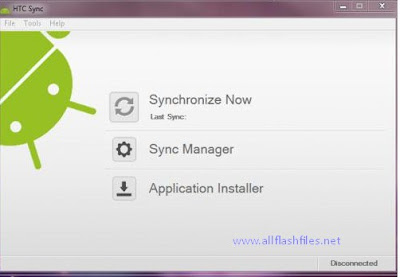
Now you can download latest setup of HTC Software updater from below download links. If downloading links are not working or you are unable to download just contact us via commenting we will change or update downloading links. If you wish to download latest setup of HTC software updater just click on below download links.
Downloading links
HTC Software Updater
Available link for download
Tuesday, January 24, 2017
HP Elite x3 high end Windows 10 Mobile phone hitting U S this month for 699
HP Elite x3 high end Windows 10 Mobile phone hitting U S this month for 699

After making its official debut back in February, the high-end HP Elite x3 is finally about to launch.

from PhoneDog.com - Latest videos, reviews, articles, news and posts http://ift.tt/29PNCip
via IFTTT
Available link for download
Monday, January 23, 2017
help RUU for m8 dwgl dual sim
help RUU for m8 dwgl dual sim
or anyone? please help cannot find the ruu for this model thanks
from xda-developers http://ift.tt/2aEFaRC
via IFTTT
Available link for download
Sunday, January 15, 2017
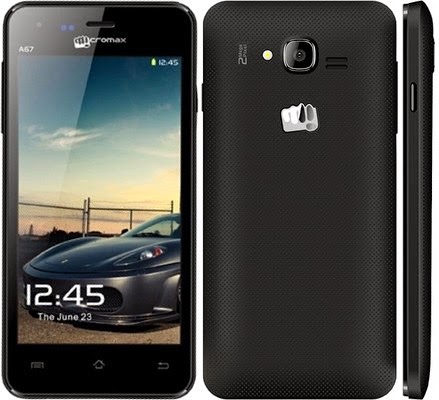
Micromax Bolt A67 Stock ROM For All Download
Micromax Bolt A67 Stock ROM For All Download
Micromax Bolt A67 Stock ROM Form All Download
Here you can find most popular Chinese phone flash file, stock rom, tablet new and latest firmware free direct download link
Android os Version 4.0.3 Latest factory firmware download from here
Guide: How to flash Micromax Bolt A67 video tutorial with factory tools
Micromax Bolt A67 Factory firmware upgrade tool
ROM v1.1.7 Size: (266 MB)
Download V1.1.7
ROM v1.1.8 Size: (264 MB)
Download V1.1.8
How to hard reset Micromax Bolt A67 Solution here
Available link for download
Kyocera Hydro Shore is a new waterproof Android phone for AT T GoPhone
Kyocera Hydro Shore is a new waterproof Android phone for AT T GoPhone

Kyocera has become known for offering waterproof Android smartphones, and today it revealed its latest hydrophobic handset.
The Kyocera Hydro Shore will be available starting tomorrow July 16. It’ll be available for AT&T’s GoPhone prepaid service, but you’ll only be able to buy the Hydro Shore from Walmart. Pricing for the Hydro Shore will be $79.99.

from PhoneDog.com - Latest videos, reviews, articles, news and posts http://ift.tt/29Nq6DX
via IFTTT
Available link for download
Saturday, January 14, 2017
Games developer Dots share their Do’s and Don’ts for improving your visibility on Google Play
Games developer Dots share their Do’s and Don’ts for improving your visibility on Google Play
Editor’s note: A few weeks ago we shared some tips from game developer, Seriously, on how they’ve been using notifications successfully to drive ongoing engagement. This week, we’re sharing tips from Christian Calderon at US game developer, Dots, on how to successfully optimize your Play Store Listing. -Ed.

A well thought-out Google Play store listing can significantly improve the discoverability of your app or game and drive installations. With the recent launch of Store Listing Experiments on the Google Play Developer Console, you can now conduct A/B tests on the text and graphics of your store listing page and use the data to make more informed decisions.
Dots is a US-founded game developer which released the popular game, Dots, and its addictive sequel, TwoDots. Dots used its store listings to showcase its brands and improve conversions by letting players know what to expect.
Christian Calderon, Head of Marketing for Dots, shared his top tips with us on store listings and visibility on Google Play.
Do’s and Don’ts for optimizing store listings on Google Play
| Do’s | Don’ts |
| Do be creative and unique with the icon. Try to visually convince the user that your product is interesting and in alignment with what they are looking for. | Don’t spam keywords in your app title. Keep the title short, original and thoughtful and keep your brand in mind when representing your product offering. |
| Do remember to quickly respond to reviews and implement a scalable strategy to incorporate feedback into your product offering. App ratings are important social proof that your product is well liked. | Don’t overload the ‘short description’. Keep it concise. It should be used as a call-to-action to address your product’s core value proposition and invite the user to install the application. Remember to consider SEO best practices. |
| Do invest in a strong overall paid and organic acquisition strategy. More downloads will make your product seem more credible to users, increasing the likeliness that a user will install your app. | Don’t overuse text in your screenshots. They should create a visual narrative for what’s in your game and help users visualize your product offering, using localization where possible. |
| Do link your Google Play store listing to your website, social media accounts, press releases and any of your consumer-facing channels that may drive organic visibility to your target market. This can impact your search positioning. | Don’t have a negative, too short or confusing message in your “What’s New” copy. Let users know what updates, product changes or bug fixes have been implemented in new versions. Keep your copy buoyant, informative, concise and clear. |
| Do use Video Visualization to narrate the core value proposition. For TwoDots, our highest converting videos consist of gameplay, showcasing features and events within the game that let the player know exactly what to expect. | Don’t flood the user with information in the page description. Keep the body of the page description organized and concise and test different structural patterns that works best for you and your product! |
Use Google Play Store Listing Experiments to increase your installs
As part of the 100 Days of Google Dev video series, Kobi Glick from the Google Play team explains how to test different graphics and text on your app or game’s Play Store listing to increase conversions using the new Store Listing Experiments feature in the Developer Console.
Find out more about using Store Listing Experiments to turn more of your visits into installs.
Available link for download
Thursday, January 12, 2017
Google is making it easier for emergency services to find you when you need them
Google is making it easier for emergency services to find you when you need them
Google is using your Android phone to make it easier for emergency services to find you when you need help. With support from mobile networks, the Emergency Location Service sends your location of your phone to emergency services when you call an emergency number.

From Google:
This feature, when supported by your network, sends location from your phone to emergency services when you dial an emergency number. This uses the same location technologies available to apps on your phone, including Wi-Fi, GPS, and cell towers, to produce a more reliable emergency location both indoors and outdoors.
Your location is only sent to emergency services, and is never seen by Google, nor sent through their servers. The Emergency Location Service will be available as a part of Google Play Services for phones running Android 2.3 Gingerbread or later, which Google says covers around 99% of Android phones.
Emergency Location Service is already live in the UK and Estonia through carriers like BT, EE, Vodafone, O2, Tele2, and Telia. Google is working with other countries and carriers in order to facilitate an faster international rollout of the feature.

from Android Central - Android Forums, News, Reviews, Help and Android Wallpapers http://ift.tt/2a12loM
via IFTTT
Available link for download