Thursday, February 2, 2017
How to Change Facebook Themes with Chrome Extension
How to Change Facebook Themes with Chrome Extension
Earlier i have seen many extensions but Recently this one is on Top of my list.So today i decided to share with you all about this particular Extension that will give your facebook a whole new look. With this Facebook Themes Chrome extension, you get to choose your favourite Color and theme.Which is that extension ? How to Install ? How to Use it ? Stay calm, I will show you Complete Procedure step by step, Just stay with me.

How to Change Facebook Themes?
- First of all, Goto the Chrome Web Store, Download and Install Facebook Themes Extension.
- Install the Facebook Theme Extension by clicking on Free or Add to Chrome Button on Top Right hand Side of the Web page. (Feel free to Check the Reviews about this extension before installing.)
- It will take just a second to download the Extension, Now Click on Customize and Control Google Chrome Button > Tools > Extensions OR Alternatively you can just Type : chrome://extensions/ in your address bar to show up all installed extensions
- Now if you have Many Extensions Installed, Look for Facebook Themes Extension and Click on “Option” . Refer to The below picture to get more clear idea about what i am trying to explain here.
Available link for download

Wednesday, February 1, 2017
Chrome Web Store Adds Compatibility Information
Chrome Web Store Adds Compatibility Information
Chrome Web Store now shows if an app, extension or theme is "compatible with your device". Google also uses a small icon to reassure users that they can install the app, extension or theme and it will work on their device.

If the app is not compatible, the blue "add to Chrome" button is replaced by a red "not compatible" button, just like before. Click the "not compatible" button and youll see a message like: "This application is not supported on this computer. Installation has been disabled. The following problems are detected: This app runs only on Chrome OS".
{ Thanks, Mukil Elango. }
Available link for download
Sunday, January 8, 2017
Google to Merge Android With Chrome OS
Google to Merge Android With Chrome OS
Update: Hiroshi Lockheimer, Googles SVP for Android, Chrome OS and Chromecast says that Chrome OS is here to stay: "While weve been working on ways to bring together the best of both operating systems, theres no plan to phase out Chrome OS."
Original post:
Wall Street Journal reports that Google works on integrating Chrome OS into Android and will release a unified OS that runs on phones, tablets, laptops and more. "The company plans to unveil its new, single operating system in 2017, but expects to show off an early version next year."
So why kill Chrome OS and switch to Android? Chrome OS has a small desktop market share, while Android is the dominant mobile OS. There are a lot more apps in the Google Play Store than in the Chrome Web Store and Google had a hard time convincing developers to build Chrome apps. Google even ported the Android runtime to Chrome, so that you can run Android apps in Chrome OS.
Googles CEO, Sundar Pichai, has recently said that "mobile as a computing paradigm is eventually going to blend with what we think of as desktop today". Most likely, Google wants to bring Android to the desktop and provide a coherent experience. This solves some of the issues with Chrome OS (the lack of apps, low market share), but brings more challenges (Android is less secure than Chrome OS, its updated less often, has a more complicated interface, it doesnt have a windowing system, apps arent optimized for desktop).
I like Chromebooks because theyre simple devices that require no maintenance. There are few things you can change, few things that can go wrong. Its easy to share them with other people, you dont have to worry about backups or saving your data.
Pixel Cs announcement makes more sense now. Its an Android tablet developed by the Chromebook Pixel team. “We think the Pixel C’s tablet and keyboard experience really unlocks new ways to both play and be productive on one device,” mentioned Google.

Google has a lot of work to do. Androids tablet interface is pretty poor, theres no native multi-window support, Chrome for Android doesnt support extensions, apps and themes.
Chromebooks were all about the web, but native apps turned out to be more important for users. Better performance, better integration with the operating system, better interface - native apps trumped web apps and Chrome OS couldnt find a way to turn the tide.
{ Thanks, David. }
Available link for download
Chrome custom tabs smooth the transition between apps and the web
Chrome custom tabs smooth the transition between apps and the web
Originally posted on the Chromium blog
Posted by Yusuf Ozuysal, Chief Tab Customizer
Android app developers face a difficult tradeoff when it comes to showing web content in their Android app. Opening links in the browser is familiar for users and easy to implement, but results in a heavy-weight transition between the app and the web. You can get more granular control by building a custom browsing experience on top of Android’s WebView, but at the cost of more technical complexity and an unfamiliar browsing experience for users. A new feature in the most recent version of Chrome called custom tabs addresses this tradeoff by allowing an app to customize how Chrome looks and feels, making the transition from app to web content fast and seamless.
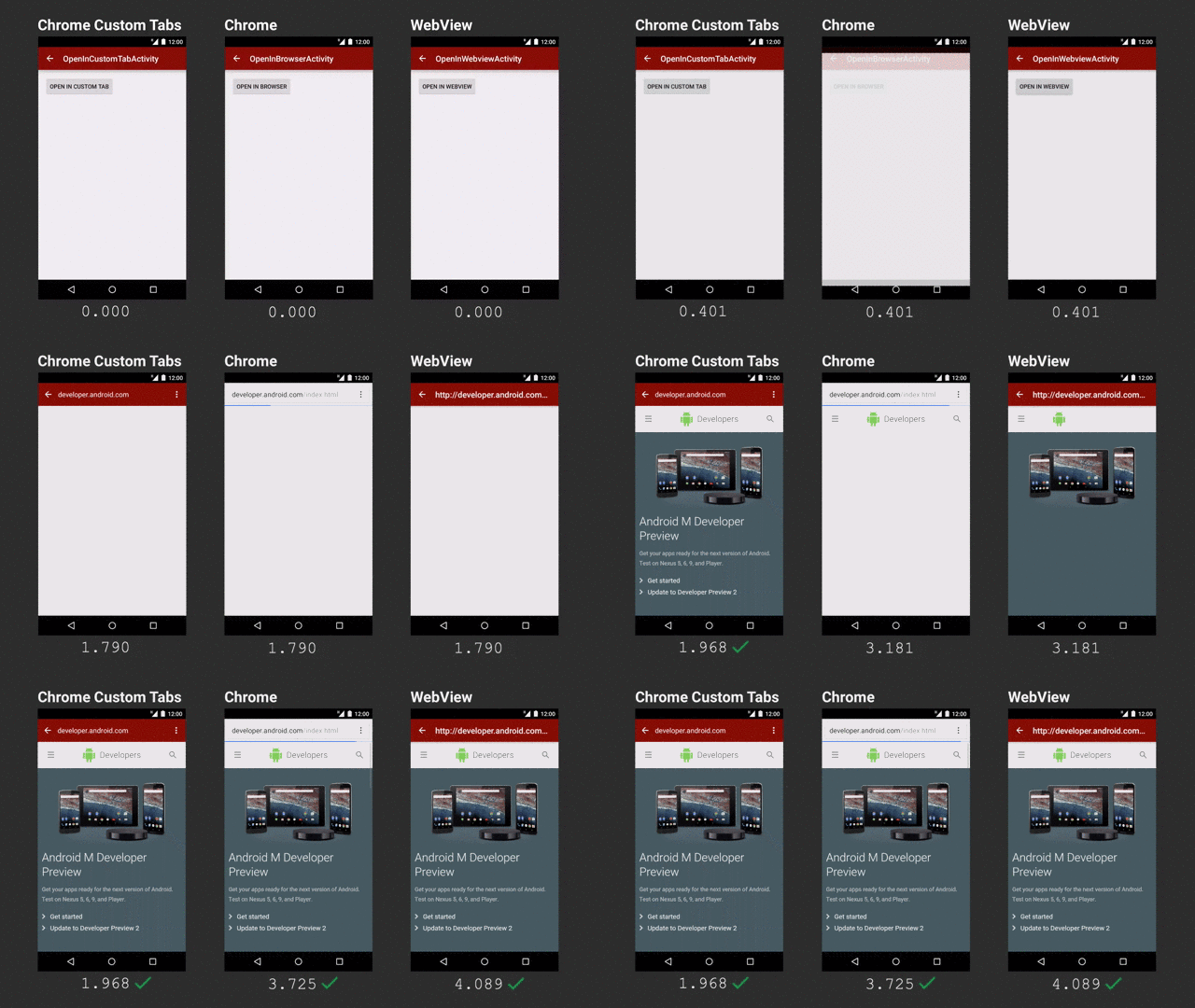
Chrome custom tabs allow an app to provide a fast, integrated, and familiar web experience for users. Custom tabs are optimized to load faster than WebViews and traditional methods of launching Chrome. As shown above, apps can pre-load pages in the background so they appear to load nearly instantly when the user navigates to them. Apps can also customize the look and feel of Chrome to match their app by changing the toolbar color, adjusting the transition animations, and even adding custom actions to the toolbar so users can perform app-specific actions directly from the custom tab.
Custom tabs benefit from Chrome’s advanced security features, including its multi-process architecture and robust permissions model. They use the same cookie jar as Chrome, allowing a familiar browsing experience while keeping users’ information safe. For example, if a user has signed in to a website in Chrome, they will also be signed in if they visit the same site in a custom tab. Other features that help users browse the web, like saved passwords, autofill, Tap to Search, and Sync, are also available in custom tabs.
Custom tabs are easy for developers to integrate into their app by tweaking a few parameters of their existing VIEW intents. Basic integrations require only a few extra lines of code, and a support library makes more complex integrations easy to accomplish, too. Since custom tabs is a feature of Chrome, it’s available on any version of Android where recent versions of Chrome are available.
Users will begin to experience custom tabs in the coming weeks in Feedly, The Guardian, Medium, Player.fm, Skyscanner, Stack Overflow, Tumblr, and Twitter, with more coming soon. To get started integrating custom tabs into your own application, check out the developer guide.
Available link for download
Friday, December 9, 2016
7 Years of Google Chrome
7 Years of Google Chrome
A lot has changed since Google launched Chrome back in September 2008. Chromes popularity has been growing ever since then and all the other important browsers became more like Chrome. Google focused on the things that mattered and transformed the browser from a simple application into a "modern OS" for web apps.
While there are many services that claim to measure the market share for browsers, I tend to think that StatCounter is the most accurate. StatCounters stats for 2008-2015 show that Chromes market share grew from 0% to 53% in 7 years, while IEs share declined from 67% to 15%. According to StatCounter, Chrome is now the dominant browser, while IE and Firefox are continually losing market share.

Its clear that Google did a lot things right when it launched Chrome, but few people anticipated that Googles browser will take over the world. Most people didnt know whats a browser and only knew that they were supposed to click on the blue E icon to go online. Google changed this by promoting a constantly evolving browser, which was faster and more secure.
Available link for download
Wednesday, October 26, 2016
Import Chrome Bookmarks Into Google Save
Import Chrome Bookmarks Into Google Save
If you install the "Save to Google" extension for Chrome, you can now import your Chrome bookmarks into the Google Save site. Just open the sidebar menu from the Google Save site, click "import Chrome bookmarks" and wait a few minutes until all your bookmarks are saved online. Reload the pages and youll see all of your Chrome bookmarks next to the pages and images youve previously saved.
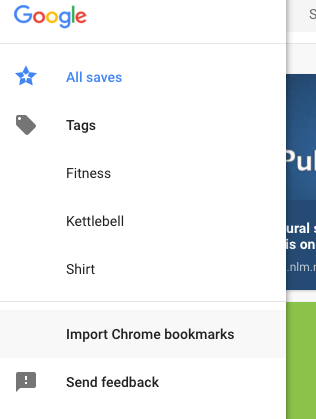
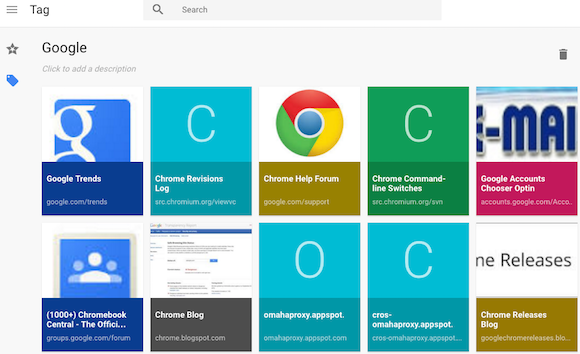
Folders and subfolders are converted into tags. Lets assume that the folder "Google" has a subfolder called "Blogs". The two folders are converted into two tags: "Google" and "Google > Blogs", while the bookmarks from the "Blogs" subfolders get both tags.
For now, theres no way to sync Google Save with Chrome bookmarks and the Bookmark Manager extension doesnt integrate with Google Save, even if theyre closely related.
{ Thanks, Mukil Elango. }
Available link for download
Friday, October 21, 2016
Google Chrome Al final era Security Privacy Bug y no una Feature o un Issue
Google Chrome Al final era Security Privacy Bug y no una Feature o un Issue
 |
| Figura 1: Google Chrome: Al final era "Security & Privacy Bug" y no una "Feature" o un "Issue" |
 |
| Figura 2: Primera catalogación como Feature y se cierra como un "WordFix" |
 |
| Figura 3: Tercera catalogación como Privacy & Security-UX Feature |
 |
| Figura 4: Cuarta catalogación como Security & Privacy Bug |
Sigue Un informático en el lado del mal - Google+ RSS 0xWord

Available link for download